Speed up your website.
A one second
delay in a web page load time results fewer page views, decrease in customer
satisfaction and loss in conversion. So, few extra seconds in page loading
creates a huge impact.
Website speed optimization influences conversion because slow speed kills conversions. If our web site takes more than three seconds to load, you lose almost half of our visitors before they even arrive on our site which is a huge blow to our potential conversion.
Website speed optimization influences conversion because slow speed kills conversions. If our web site takes more than three seconds to load, you lose almost half of our visitors before they even arrive on our site which is a huge blow to our potential conversion.
Web speed
also influences visibility because Google takes speed into consideration when
ranking the sites. Load times can also influence how easily users can find you
in the first place.
According to
Google, best practice is three seconds. Of all the industries they included, non-had
an average even close to their recommended best practice of three seconds.

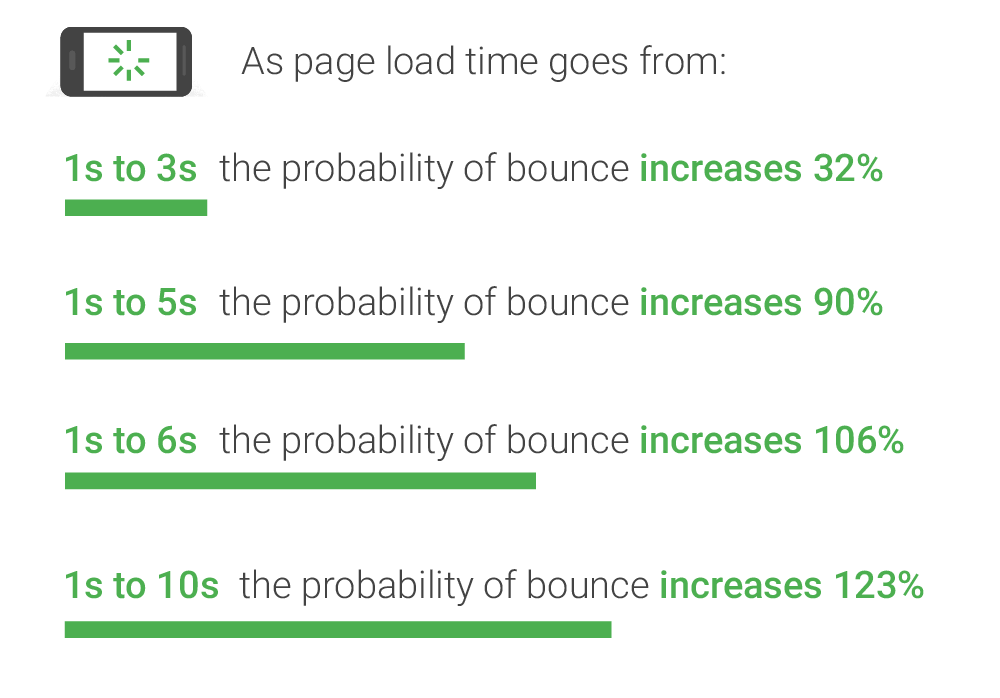
Plus as page
load time goes from one to ten seconds, the probability of a mobile user bouncing
increases by 123%.
How to speed
up websites
- Minimize HTTP requests
- Minimize and combine files.
- Use asynchronous loading for CSS and JavaScript files.
- Defer JavaScript loading.
- Minimize time to first byte.
- Reduce server respond time.
- Choose the right hosting option for our need.
- Run a compression audit.
- Enable compression.
- Enable browser caching.
- Reduce image size.
- Use a CDN.
- Use external hosting platform.
- Optimize CSS delivery
- Prioritize above the fold content.
- Reduce the number of plugins you use on your site.
- Reduce redirects.
- Reduce external scripts.
- Monitor our speed over time.
- Monitor mobile page speed.
More details :


Comments
Post a Comment